Preserving America’s Flagship Before Its Final Voyage
How Beast Code, Point3D and their project partners captured the SS United States in 3D before it became the world’s largest artificial reef.
On November 11, 2026, the SS United States slipped beneath the Gulf off Destin, Florida. The 990-foot liner, which set the transatlantic speed record on its maiden voyage in 1952, had completed its final voyage. Before Okaloosa County sank the ship to create the world’s largest artificial reef, Point3D helped build a 3D record of the vessel as it stood above water. 6abc’s deployment coverage
Beast Code brought the teams togetherDavid Heath and the Beast Code team led the documentation effort from Fort Walton Beach, Florida. Working closely with Okaloosa County, they coordinated access and scheduling for NavVis, SSI, Q3D Sensing, Rescan360, ATI and Point3D. Beast Code brought the partners’ captures together to create a digital record of the ship.
How Point3D established control and captured the ship
Point3D set up the survey control network and placed targets for the second phase of capture. The network gave teams a common frame of reference so they could align scans collected with different instruments and combine them into a single dataset.
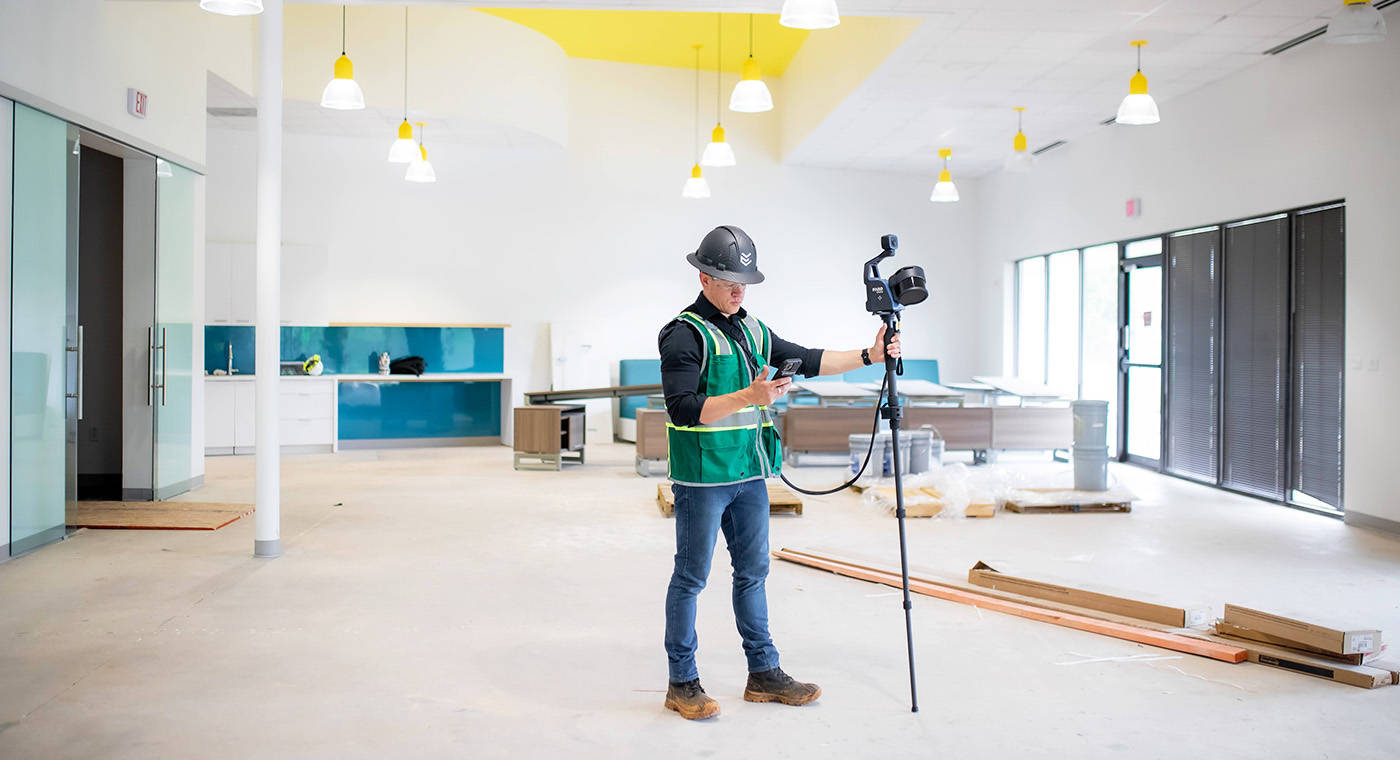
The vessel’s dark, cramped interiors made fieldwork challenging. In some areas, it was unsafe to linger. Point3D used the FARO Orbis mobile scanner to cover large areas quickly and limit time in those spaces. The FARO Blink terrestrial scanner captured finer detail in selected areas, including the ship’s staircases.
The ship’s next chapter on the seafloor
Early sonar and remotely operated vehicle inspections indicated that the liner settled upright on the Gulf floor. Researchers at Woods Hole Oceanographic Institution are studying how marine organisms colonize the ship and how an ecosystem develops on a structure of this scale. Pensacola News Journal coverage · Woods Hole Oceanographic Institution’s research overview
What the scans preserve
The 3D record captures the ship’s layout and details as they were before deployment. Someone studying the vessel can examine the relationship between decks or revisit a staircase without needing access to the ship. The same approach applies to documenting a historic building before renovation or recording a site before construction. Capturing existing conditions while they’re still accessible gives people a record they can return to after the site changes.
Thank you to David Heath, Beast Code and every partner who helped document the SS United States.
For historic documentation, as-built capture or scanning in a hard-to-reach environment, contact Point3D to discuss your project.